What is the impact of crane rotation on a Crane Moment Limiter's readings?
 Language
 Français
 Español
 Árabe
Árabe
 Deutsch
 简体中文
简体中文
 Português
 Русский
 日本語
日本語
 한국어
한국어
 हिंदी
हिंदी
 Prancis
 Türkçe
 Tiếng Việt
 Italiano
 ไทย
ไทย

-
Tel
+86 15275228746
-
WhatsApp/WeChat
8615275228746
Blog
Company intro
10000m 2+ Cover Area QINGDAO TOP RUN INTERNATIONAL TRADE CO., LTD Qingdao Top Run International Trade Co., Ltd. has been a professional and leading supplier of construction machinery spare parts in China for over 15 years. With extensive experience and expertise, we have established strong partnerships with top manufacturers to offer a wide range of genuine and OEM parts for brands such as XCMG, SANY, ZOOMLION, SHANTUI, LIUGONG, and more. 80+ Employees View more Looking for properate products? Contact us
Send Message
What is the impact of crane rotation on a Crane Moment Limiter's readings?
Aug 5, 2025
View: 192
Hey there! As a supplier of Crane Moment Limiters, I've been getting a lot of questions lately about how crane rotation affects the readings on these crucial safety devices. So, I thought I'd take a deep dive into this topic and share some insights with you all.
First off, let's quickly go over what a Crane Moment Limiter is. It's basically a safety system that monitors the crane's load moment, which is the product of the load weight and its distance from the crane's pivot point. The limiter ensures that the crane doesn't exceed its safe working limits, preventing dangerous situations like tipping over.
Now, when it comes to crane rotation, it can have a significant impact on the Moment Limiter's readings. You see, as the crane rotates, the position of the load changes relative to the crane's structure. This change in position affects both the load's distance from the pivot point and the forces acting on the crane.
One of the main factors is the change in the radius of the load. When the crane rotates, the load moves in an arc around the pivot point. If the load is moving away from the crane's center, the radius increases. According to the formula for load moment (M = W x R, where M is the moment, W is the weight, and R is the radius), an increase in the radius means an increase in the load moment. So, the Moment Limiter will detect this change and may trigger an alarm if the new load moment approaches or exceeds the safe limit.
Another aspect to consider is the dynamic forces generated during rotation. When the crane starts or stops rotating, there are inertial forces acting on the load. These forces can cause the load to sway or shift, which in turn can change the effective load moment. For example, if the load sways outward during rotation, it effectively increases the radius and the load moment. The Moment Limiter needs to account for these dynamic forces to provide accurate readings.
Let's take a closer look at some real - world scenarios. Imagine a truck crane [check out the Truck Crane Hook for more info on truck crane components] that is lifting a heavy load and then rotates to place it at a different location. As the crane begins to rotate, the load starts to move in an arc. The Moment Limiter has to continuously calculate the changing load moment based on the new position of the load. If the crane operator is not careful and rotates too quickly or with a heavy load, the sudden increase in load moment can catch them off - guard.
In some cases, the crane's structure itself can also affect the readings during rotation. The flexibility of the crane's boom or jib can cause it to deflect under the load and during rotation. This deflection can change the actual position of the load and the forces acting on the crane. The Moment Limiter needs to be calibrated to account for these structural deflections to provide accurate readings.
Now, as a Crane Moment Limiter supplier, we've put a lot of effort into developing limiters that can accurately handle the challenges posed by crane rotation. Our limiters use advanced sensors and algorithms to continuously monitor the load's position, weight, and the forces acting on the crane. They can quickly adapt to changes in load moment caused by rotation and provide reliable safety warnings.
For example, our sensors can detect even small changes in the load's position and calculate the new load moment in real - time. The algorithms are designed to filter out noise and account for dynamic forces. This ensures that the limiter provides accurate readings even during rapid or complex crane rotations.
But it's not just about the technology. Proper installation and maintenance of the Moment Limiter are also crucial. The sensors need to be installed in the right locations on the crane to accurately measure the relevant parameters. Regular maintenance, including calibration checks, is necessary to ensure that the limiter continues to work correctly over time.
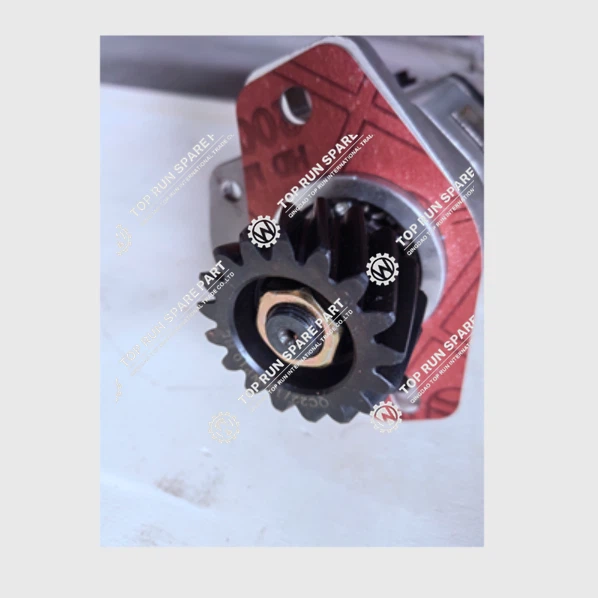
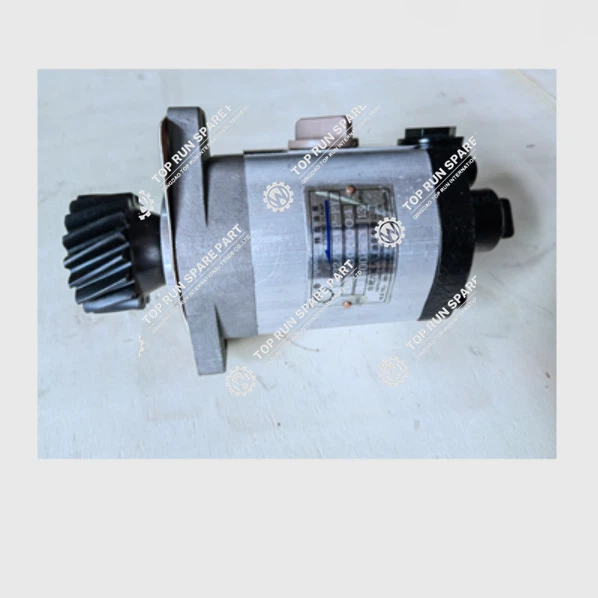
Let's talk about some of the spare parts that are related to crane operation and can indirectly affect the Moment Limiter's performance. The Steering Pump 1032300004 is an important component in the crane's hydraulic system. A faulty steering pump can affect the smoothness of crane rotation, which in turn can lead to unexpected changes in the load moment. Similarly, the Balance Valve 1010300194 helps in controlling the flow of hydraulic fluid and maintaining stability during crane operations. Any issues with these parts can impact the overall performance of the crane and the accuracy of the Moment Limiter's readings.
In conclusion, crane rotation has a significant impact on the readings of a Crane Moment Limiter. The change in load radius, dynamic forces, and structural deflections all play a role in altering the load moment. As a supplier, we're committed to providing high - quality limiters that can accurately account for these factors and keep crane operations safe.
If you're in the market for a reliable Crane Moment Limiter or need more information about how it can work in your specific crane applications, don't hesitate to reach out. We're here to help you make the right choice and ensure that your crane operations are as safe and efficient as possible. Let's start a conversation about your needs and how our products can fit into your business.
References
- Crane Safety Handbook, 3rd Edition
- Technical Papers on Crane Dynamics and Load Moment Calculation
Categories
QR Code


